




Parameters
- 400 pages
- 14 hours of reading
More about the book
Is America an empire? The government insists it is not, despite military conquests and over 750 installations worldwide. George W. Bush claims, "America has never been an empire," while Defense Secretary Rumsfeld asserts, "We don’t seek empires." Niall Ferguson challenges this view in his analysis, arguing that the U.S. is indeed the most powerful empire in history, akin to the British Empire of a century ago. The U.S. aims to globalize free markets, the rule of law, and representative government. However, Ferguson points out that Americans often resist the long-term commitments of resources necessary for transforming rogue regimes and failed states. He describes this as an empire suffering from attention deficit disorder, imposing unrealistic timelines on its interventions. Moreover, Ferguson highlights a troubling denial of the scale of America's global responsibilities, warning that the repercussions will be felt both internationally and domestically. In a compelling conclusion, he cautions that this chronic short-sightedness extends to domestic issues as well, suggesting that when overstretch occurs, it will reveal vulnerabilities within the American colossus itself.




Book purchase
Colossus, Niall Ferguson
- Language

- Released
- 2004
- Binding
- (Hardcover)
Payment methods
We’re missing your review here.
- Title
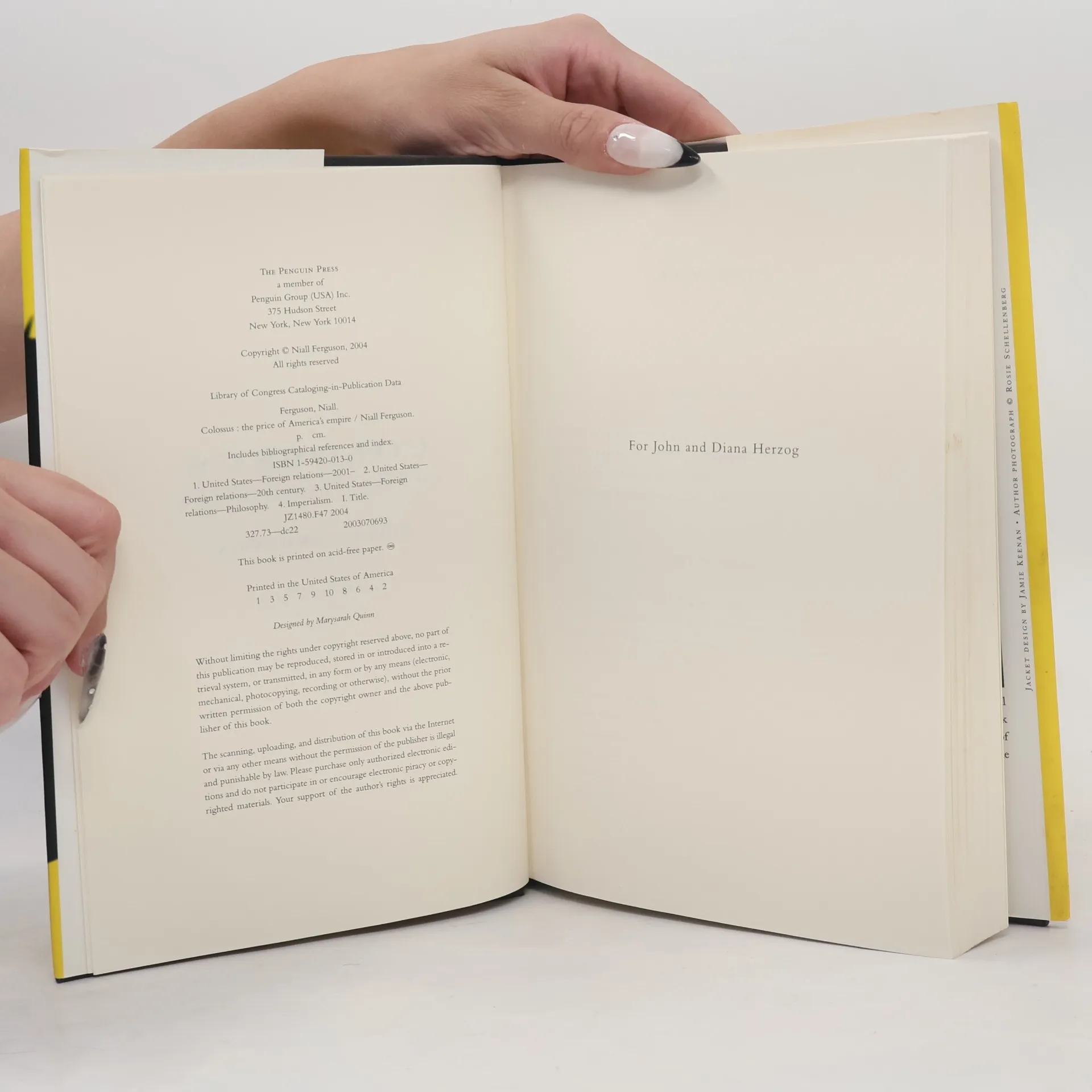
- Colossus
- Subtitle
- The Price of America's Empire
- Language
- English
- Authors
- Niall Ferguson
- Publisher
- Penguin Press
- Released
- 2004
- Format
- Hardcover
- Pages
- 400
- ISBN10
- 1594200130
- ISBN13
- 9781594200137
- Series
- Categories
- Original title
- Colossus
- Rating
- 3.55 out of 5
- Description
- Is America an empire? The government insists it is not, despite military conquests and over 750 installations worldwide. George W. Bush claims, "America has never been an empire," while Defense Secretary Rumsfeld asserts, "We don’t seek empires." Niall Ferguson challenges this view in his analysis, arguing that the U.S. is indeed the most powerful empire in history, akin to the British Empire of a century ago. The U.S. aims to globalize free markets, the rule of law, and representative government. However, Ferguson points out that Americans often resist the long-term commitments of resources necessary for transforming rogue regimes and failed states. He describes this as an empire suffering from attention deficit disorder, imposing unrealistic timelines on its interventions. Moreover, Ferguson highlights a troubling denial of the scale of America's global responsibilities, warning that the repercussions will be felt both internationally and domestically. In a compelling conclusion, he cautions that this chronic short-sightedness extends to domestic issues as well, suggesting that when overstretch occurs, it will reveal vulnerabilities within the American colossus itself.