

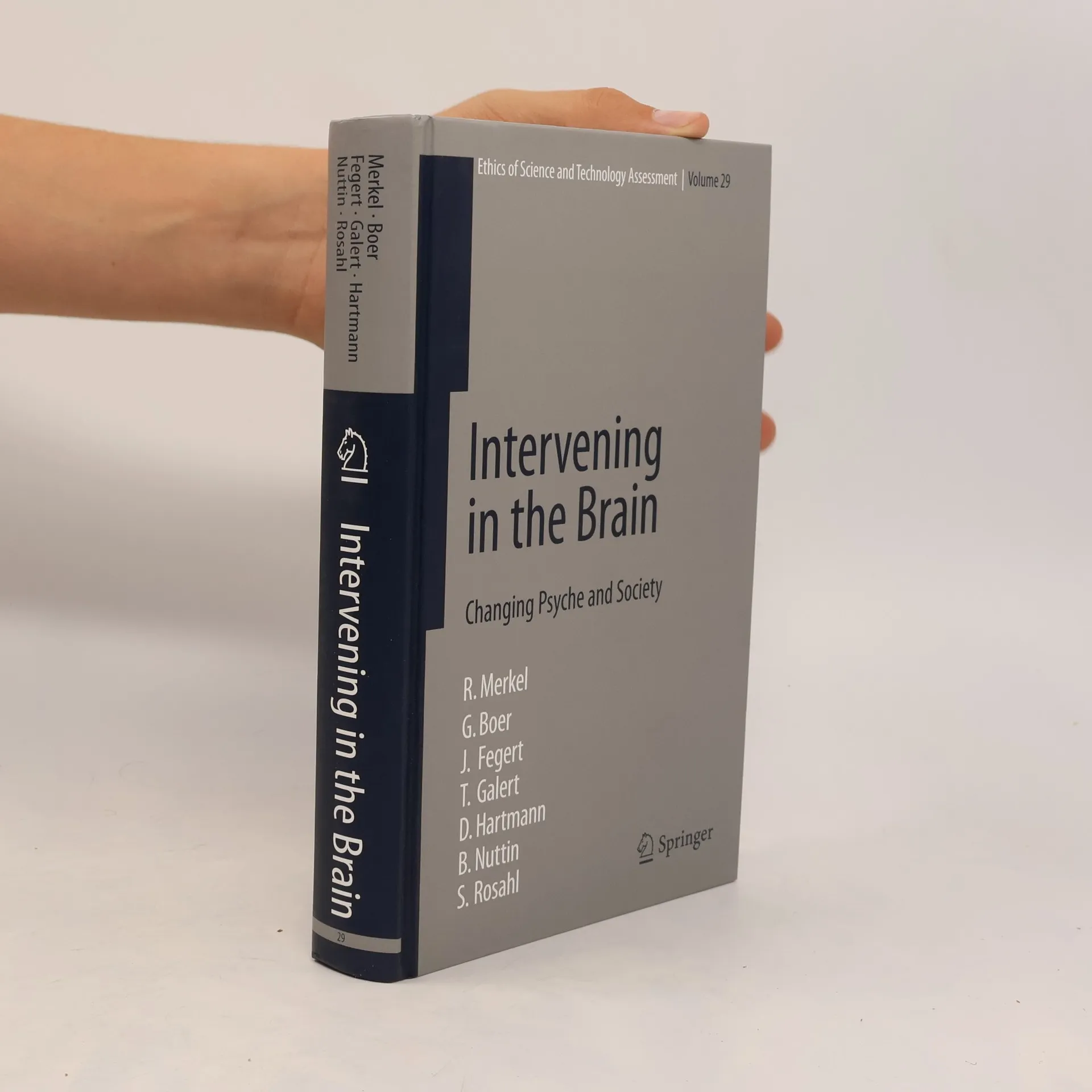


More about the book
The Europäische Akademie examines the implications of scientific and technological advancements for individuals, society, and the environment. A key focus is on evaluating the effects of progress in medical research and technology, particularly in neuroscience, which has introduced many innovative treatment methods. Despite their potential benefits, new brain intervention techniques often face public skepticism due to the brain's significance as the "organ of the mind." It is widely regarded as the source of humanity's unique status among living beings and the foundation of individual uniqueness. Given the brain's critical importance, interventions in this area are approached with caution, and new methods are scrutinized carefully. However, it is crucial to avoid excessive hesitation that could prevent the adoption of promising therapies for serious brain disorders. An interdisciplinary perspective is essential to differentiate between irrational fears and legitimate concerns regarding these emerging techniques.
Book purchase
Ethics of Science and Technology Assessment - 29: Intervening in the Brain, Reinhard Merkel, Gerard J. Boer, Jörg M. Fegert, Thorsten Galert, Dirk Hartmann, Bart Nuttin, Steffen Rosahl
- Language

- Released
- 2007
- Binding
- (Hardcover)
Payment methods
No one has rated yet.
- Title
- Ethics of Science and Technology Assessment - 29: Intervening in the Brain
- Subtitle
- Changing Psyche and Society
- Language
- English
- Authors
- Reinhard Merkel, Gerard J. Boer, Jörg M. Fegert, Thorsten Galert, Dirk Hartmann, Bart Nuttin, Steffen Rosahl
- Publisher
- Springer
- Released
- 2007
- Format
- Hardcover
- Pages
- 533
- ISBN10
- 354046476X
- ISBN13
- 9783540464761
- Series
- Categories
- Tags
- Health & Medicine, Philosophical Topics, Medicine, Technology, Society, Emotions, Ethics, Western Europe, Psychiatry, Neuroscience, Neurology, Social Aspects, Biotechnology, Neurosurgery, Transplantation
- Description
- The Europäische Akademie examines the implications of scientific and technological advancements for individuals, society, and the environment. A key focus is on evaluating the effects of progress in medical research and technology, particularly in neuroscience, which has introduced many innovative treatment methods. Despite their potential benefits, new brain intervention techniques often face public skepticism due to the brain's significance as the "organ of the mind." It is widely regarded as the source of humanity's unique status among living beings and the foundation of individual uniqueness. Given the brain's critical importance, interventions in this area are approached with caution, and new methods are scrutinized carefully. However, it is crucial to avoid excessive hesitation that could prevent the adoption of promising therapies for serious brain disorders. An interdisciplinary perspective is essential to differentiate between irrational fears and legitimate concerns regarding these emerging techniques.