

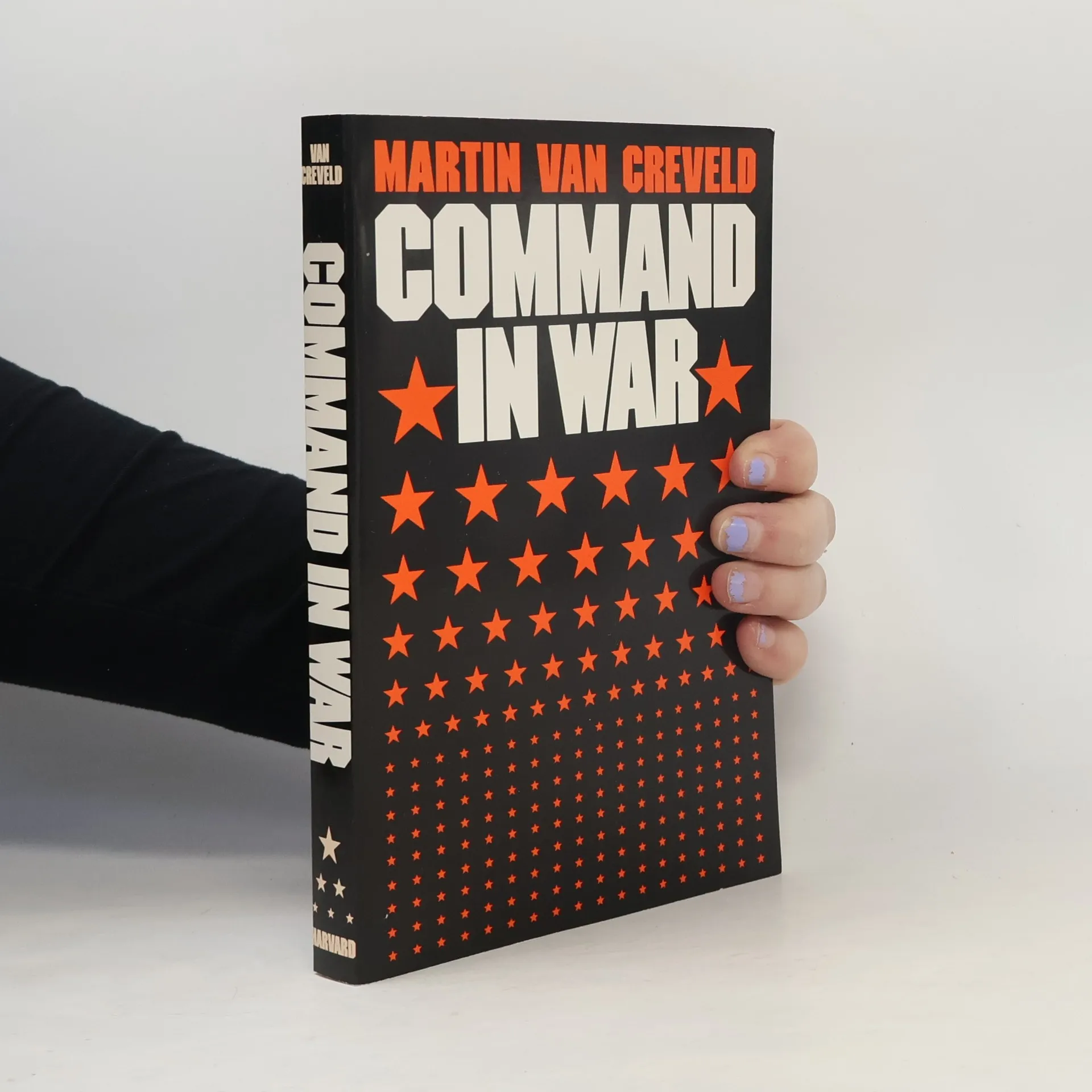


Parameters
- 352 pages
- 13 hours of reading
More about the book
Many books have explored strategy, tactics, and renowned commanders, but this work uniquely focuses on the essence of command itself, tracing its evolution over two millennia from ancient Greece to Vietnam. It examines the diverse challenges of commanding armies, including staff organization, administration, communication methods, weaponry, and logistics, while analyzing their connection to military strategy. Through vivid accounts of pivotal battles and campaigns—such as Napoleon at Jena, Moltke’s Königgrätz campaign, the 1973 Arab–Israeli war, and the Vietnam conflict—Martin van Creveld highlights the practical implications of command and the impact of technological advancements. Innovations like railroads, breech-loading rifles, telegraphs, radios, tanks, and helicopters provided commanders with new tactical opportunities, yet also introduced new constraints. Despite significant shifts in military thought and technology, the quest for certainty remains a constant theme—certainty regarding enemy forces, the multifaceted environment of warfare, and one’s own troops. The conclusion drawn is that advancements in command have often stemmed not from adopting newer technologies, but from overcoming the limitations of those already in use.
Book purchase
Command in War, Martin van Creveld
- Language

- Released
- 1985
- Binding
- (Paperback)
Payment methods
No one has rated yet.
- Title
- Command in War
- Language
- English
- Authors
- Martin van Creveld
- Publisher
- Harvard University Press
- Released
- 1985
- Format
- Paperback
- Pages
- 352
- ISBN10
- 0674144414
- ISBN13
- 9780674144415
- Series
- Categories
- Description
- Many books have explored strategy, tactics, and renowned commanders, but this work uniquely focuses on the essence of command itself, tracing its evolution over two millennia from ancient Greece to Vietnam. It examines the diverse challenges of commanding armies, including staff organization, administration, communication methods, weaponry, and logistics, while analyzing their connection to military strategy. Through vivid accounts of pivotal battles and campaigns—such as Napoleon at Jena, Moltke’s Königgrätz campaign, the 1973 Arab–Israeli war, and the Vietnam conflict—Martin van Creveld highlights the practical implications of command and the impact of technological advancements. Innovations like railroads, breech-loading rifles, telegraphs, radios, tanks, and helicopters provided commanders with new tactical opportunities, yet also introduced new constraints. Despite significant shifts in military thought and technology, the quest for certainty remains a constant theme—certainty regarding enemy forces, the multifaceted environment of warfare, and one’s own troops. The conclusion drawn is that advancements in command have often stemmed not from adopting newer technologies, but from overcoming the limitations of those already in use.