



Parameters
- 720 pages
- 26 hours of reading
More about the book
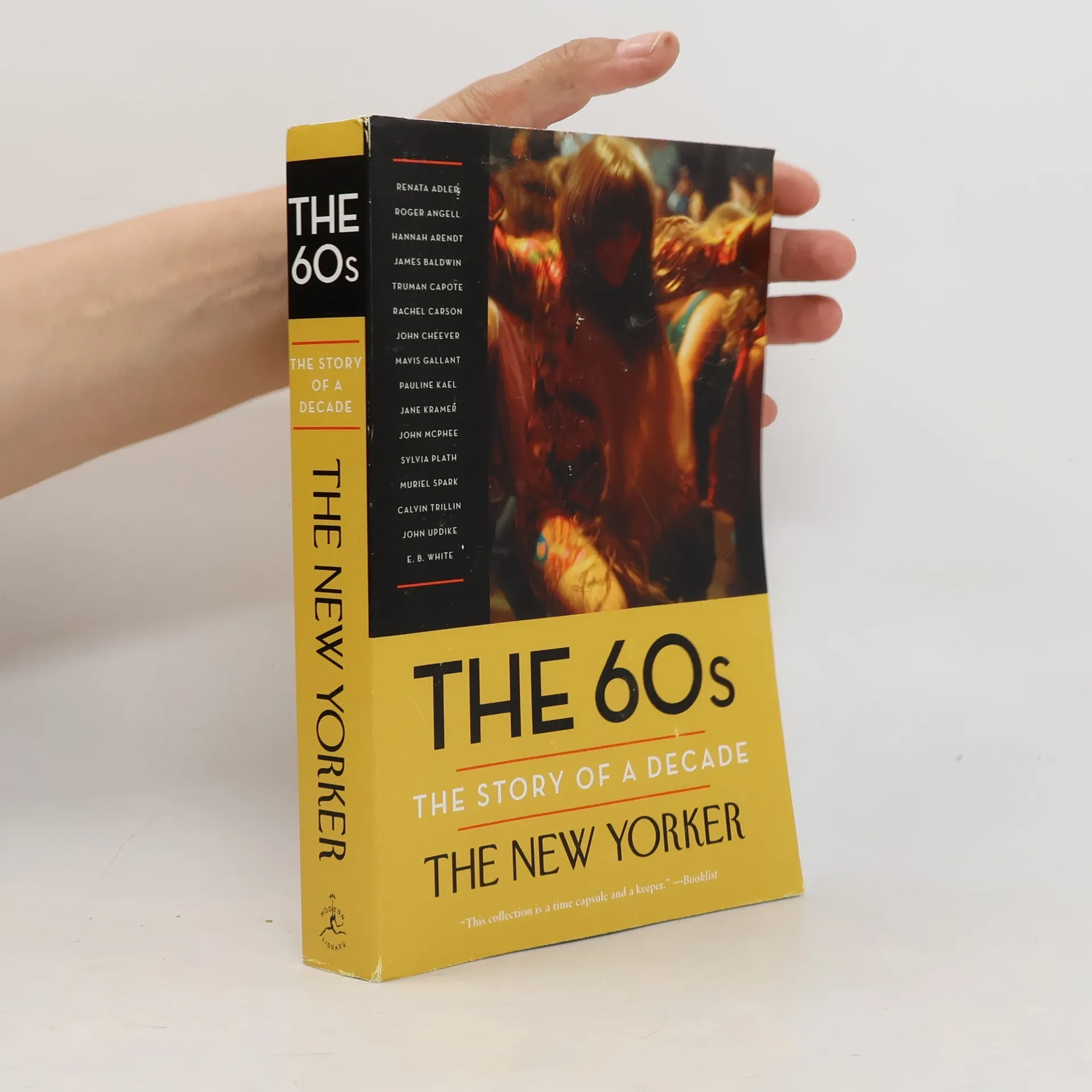
The anthology features significant New Yorker articles from the tumultuous 20th century, showcasing works by renowned authors like James Baldwin, Sylvia Plath, and Pauline Kael. It also includes contemporary evaluations of the 1960s by today's leading writers, providing a rich exploration of the era's cultural and social dynamics. This collection highlights both historical perspectives and modern interpretations, making it a compelling read for those interested in literary history and the evolution of thought during a pivotal decade.
Book purchase
The New Yorker: The 60s: The Story of a Decade, Truman Capote, Muriel Spark, John Updike, Sylvia Plath, John Cheever, Hannah Arendt, Jane Kramer, Calvin Trillin, Rachel Carson, Roger Angell, Mavis Gallant, John McPhee, Renata Adler, Pauline Kael, James Baldwin, E. B. White, The New Yorker Magazine
- Language

- Released
- 2017
- Binding
- (Paperback)
Payment methods
No one has rated yet.
- Title
- The New Yorker: The 60s: The Story of a Decade
- Language
- English
- Authors
- Truman Capote, Muriel Spark, John Updike, Sylvia Plath, John Cheever, Hannah Arendt, Jane Kramer, Calvin Trillin, Rachel Carson, Roger Angell, Mavis Gallant, John McPhee, Renata Adler, Pauline Kael, James Baldwin, E. B. White, The New Yorker Magazine
- Publisher
- MODERN LIB
- Released
- 2017
- Format
- Paperback
- Pages
- 720
- ISBN10
- 0812983319
- ISBN13
- 9780812983319
- Series
- Tags
- Historical Themes, USA, 20th century, American Literature, Society, Journalism, Collected Works, American History, Cultural History, Gifts, Social History, Civilization, 1960s, Truman Capote
- Description
- The anthology features significant New Yorker articles from the tumultuous 20th century, showcasing works by renowned authors like James Baldwin, Sylvia Plath, and Pauline Kael. It also includes contemporary evaluations of the 1960s by today's leading writers, providing a rich exploration of the era's cultural and social dynamics. This collection highlights both historical perspectives and modern interpretations, making it a compelling read for those interested in literary history and the evolution of thought during a pivotal decade.