

The book is currently out of stock
Parameters
- 160 pages
- 6 hours of reading
More about the book
Focusing on a critical examination of morality, Nietzsche challenges traditional philosophical views in this work. He argues that past thinkers have uncritically accepted dogmas, particularly the simplistic dichotomy of good versus evil. Instead, he proposes that these concepts are merely different expressions of the same underlying impulses. Moving "beyond good and evil," Nietzsche advocates for an affirmative approach that embraces the complexity of knowledge and the precarious state of modern existence, encouraging a fearless confrontation with these ideas.


Publication
- 2024

- 2024
- 2023
- 2023
- 2023
- 2023
- 2023
- 2023
- 2023
- 2023
- 2023
- 2023

- 2022
- 2022
- 2022
- 2022
- 2022
- 2022
- 2022
- 2021
- 2021
- 2021
- 2021
- 2021
- 2021
- 2021
- 2021

- 2020
- 2020
- 2020
- 2020
- 2020
- 2020
- 2020
- 2020
- 2020
- 2020
- 2020
- 2020
- 2020
- 2020
- 2020
- 2020
- 2020
- 2020
- 2020

- 2019
- 2019
- 2019
- 2019
- 2019


- 2018

- 2018
- 2018
- 2018
- 2018
- 2018
- 2018
- 2018
- 2018
- 2018
- 2017
- 2017
- 2017
- 2017
- 2016

- 2013
- 2012
- 2010
- 2009
- 2009

- 2008
- 2008
- 2008
- 2008
- 2007
- 2007
- 2006
- 2005
- 2005
- 2004
- 2004







Book purchase
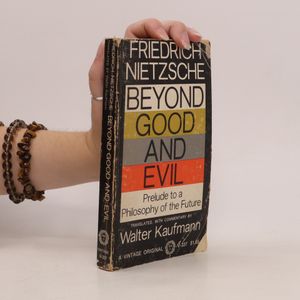
Beyond Good and Evil, Friedrich Nietzsche
- Language

- Released
- 2020
We’ll email you as soon as we track it down.
Payment methods
We’re missing your review here.
- Title
- Beyond Good and Evil
- Language
- English
- Authors
- Friedrich Nietzsche
- Publisher
- Martino Fine Books
- Released
- 2020
- Pages
- 160
- ISBN13
- 9781684224883
- Series
- Tags
- Non-Fiction, Social Sciences, True Stories, Psychological Topics, Philosophical Topics, German Literature, Opinion Journalism & Essays, 19th century
- First published
- 1886
- Original title
- Jenseits von Gut und Böse
- Rating
- 4.25 out of 5
- Description
- Focusing on a critical examination of morality, Nietzsche challenges traditional philosophical views in this work. He argues that past thinkers have uncritically accepted dogmas, particularly the simplistic dichotomy of good versus evil. Instead, he proposes that these concepts are merely different expressions of the same underlying impulses. Moving "beyond good and evil," Nietzsche advocates for an affirmative approach that embraces the complexity of knowledge and the precarious state of modern existence, encouraging a fearless confrontation with these ideas.