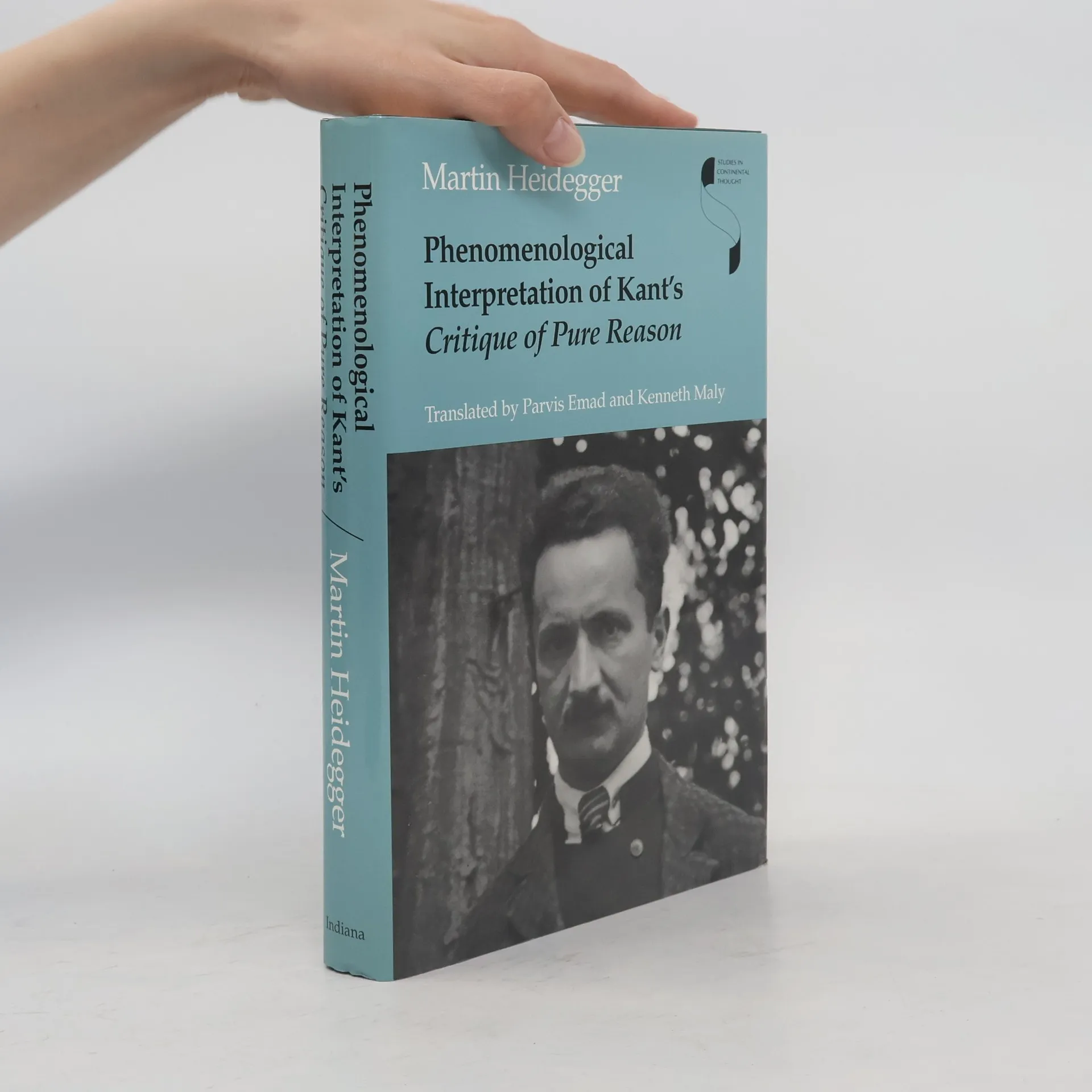
The text of Martin Heidegger's 1927--28 university lecture course on Immanuel Kant's Critique of Pure Reason presents a close interpretive reading of the first two parts of this masterpiece of modern philosophy. In this course, Heidegger continues the task he enunciated in Being and Time as the problem of dismatling the history of ontology, using temporality as a clue. Within this context the relation between philosophy, ontology, and fundamental ontology is shown to be rooted in the genesis of the modern mathematical sciences. Heidegger demonstrates that objectification of beings as beings is inseparable from knowledge a priori, the central problem of Kant's Critique. He concludes that objectification rests on the productive power of imagination, a process that involves temporality, which is the basic constitution of humans as beings.
Studies in Continental Thought Series
This series delves into the vast landscape of Continental philosophy, tracing its lineage from 19th-century German idealism through phenomenology and existentialism to contemporary thought. It features rigorous scholarship that critically engages with and expands upon foundational philosophical traditions. The collection is essential reading for academics and students seeking in-depth exploration of European philosophical movements and their ongoing relevance.


Phenomenological Interpretations of Aristotle
- 184 pages
- 7 hours of reading
An early articulation of Heidegger's philosophical method
Introduction to Phenomenological Research , volume 17 of Martin Heidegger's Gesamtausgabe, contains his first lectures given at Marburg in the winter semester of 1923–1924. In these lectures, Heidegger introduces the notion of phenomenology by tracing it back to Aristotle's treatments of phainomenon and logos . This extensive commentary on Aristotle is an important addition to Heidegger's ongoing interpretations which accompany his thinking during the period leading up to Being and Time. Additionally, these lectures develop critical differences between Heidegger's phenomenology and that of Descartes and Husserl and elaborate questions of facticity, everydayness, and flight from existence that are central in his later work. Here, Heidegger dismantles the history of ontology and charts a new course for phenomenology by defining and distinguishing his own methods.
The Principle of Reason
- 176 pages
- 7 hours of reading
Focussing on Leibniz's principle: 'nothing is without reason', this book shows that the principle of reason is in fact a principle of being. It also contains discussions of language, translation, reason, objectivity, and technology - as well as readings of Leibniz, Kant, Aristotle, and Goethe.
Concetti fondamentali della metafisica
- 496 pages
- 18 hours of reading
Queste lezioni del '29-30 - specie nei loro capitoli conclusivi - ci consentono di cogliere in fieri meglio di qualunque altro testo di Heidegger, come il progetto sistematico di ricondurre ogni genuina questione filosofica alla sua scaturigine e ai suoi presupposti originari nella finitezza dell'essere, cioè all'identità antimetafisica di tempo ed essere, abbia condotto Heidegger sulla via di una scepsi sempre più radicale e affine a quella intrapresa, in tempi diversi e con esiti altrettanto diversi, da Nietzsche. "Concetti fondamentali della metafisica" rappresentano perciò un capitolo essenziale nel cammino che avrebbe portato Heidegger, qualche anno più tardi, a decretare la fine della metafisica.
Four seminars
- 120 pages
- 5 hours of reading
In Four Seminars, Heidegger reviews the entire trajectory of his thought and offers unique perspectives on fundamental aspects of his work. First published in French in 1976, these seminars were translated into German with Heidegger's approval and reissued in 1986 as part of his Gesamtausgabe , volume 15. Topics considered include the Greek understanding of presence, the ontological difference, the notion of system in German Idealism, the power of naming, the problem of technology, danger, and the event. Heidegger's engagements with his philosophical forebears―Parmenides, Heraclitus, Kant, and Hegel―continue in surprising dialogues with his contemporaries―Husserl, Marx, and Wittgenstein. While providing important insights into how Heidegger conducted his lectures, these seminars show him in his maturity reflecting back on his philosophical path. An important text for understanding contemporary philosophical debates, Four Seminars provides extraordinarily rich material for students and scholars of Heidegger.
Logica
- 280 pages
- 10 hours of reading
Martin Heidegger impartì la materia di Logica nel semestre invernale del 1925-1926 a Marburgo. In questo corso, contrappone alla logica tradizionale una logica filosofante in cui si interroga sul logos, una logica della verità. Nella prima parte, Heidegger si rifà all'interpretazione aristotelica della verità, mentre nella seconda sviluppa la domanda radicale sulla verità nell'orizzonte dell'analitica dell'esistenza, dove il peso principale ricade sulla tematica del tempo. La sua interpretazione della Critica della ragion pura mostra il significato della problematica del tempo per Kant. Questo corso è imprescindibile per comprendere la genesi del pensiero di Heidegger.
Martin Heidegger's 1942 lecture course interprets Friedrich Hölderlin's hymn "The Ister" within the context of Hölderlin's poetic and philosophical work, with particular emphasis on Hölderlin's dialogue with Greek tragedy. Delivered in summer 1942 at the University of Freiburg, this course was first published in German in 1984 as volume 53 of Heidegger's Collected Works. Revealing for Heidegger's thought of the period are his discussions of the meaning of "the political" and "the national," in which he emphasizes the difficulty and the necessity of finding "one's own" in and through a dialogue with "the foreign." In this context Heidegger reflects on the nature of translation and interpretation. A detailed reading of the famous chorus from Sophocles' Antigone, known as the "ode to man," is a key feature of the course.
Martin Heidegger's Contributions to Philosophy reflects his famous philosophical "turning." In this work, Heidegger returns to the question of being from its inception in Being and Time to a new questioning of being as event. Heidegger opens up the essential dimensions of his thinking on the historicality of being that underlies all of his later writings. Contributions was composed as a series of private ponderings that were not originally intended for publication. They are nonlinear and radically at odds with the traditional understanding of thinking. This translation presents Heidegger in plain and straightforward terms, allowing surer access to this new turn in Heidegger's conception of being.
"Basic Concepts of Ancient Philosophy" presents a lecture course given by Martin Heidegger in 1926 at the University of Marburg. First published in German as volume 22 of the "Collected Works", the book provides Heidegger's most systematic history of Ancient philosophy beginning with Thales and ending with Aristotle. In this lecture, which coincides with the completion of his most important work, "Being and Time", Heidegger is working out a way to sharply differentiate between beings and Being. Richard Rojcewicz's clear and accurate translation offers English-speaking readers valuable insight into Heidegger's views on Ancient thought and concepts such as principle, cause, nature, unity, multiplicity, Logos, truth, science, soul, category and motion
Georg Wilhelm Friedrich Hegel gave many lectures in logic at Berlin University between 1818 and his untimely death in 1831. Edited posthumously by Hegel's son, Karl, these lectures were published in German in 2001 and now appear in English for the first time. Because they were delivered orally, Lectures on Logic is more approachable and colloquial than much of Hegel's formal philosophy. The lectures provide important insight into Hegel's science of logic, dialectical method, and symbolic logic. Clark Butler's smooth translation helps readers understand the rationality of Hegel's often dark and difficult thought. Readers at all levels will find a mature and particularly clear presentation of Hegel's systematic philosophical vision.
Martin Heidegger's reading of Aristotle was one of the pivotal influences in the development of his philosophy. First published in German in 1981 as volume 33 of Heidegger's Collected Works, this book translates a lecture course he presented at the University of Freiburg in 1931. Heidegger's careful translation and his probing commentary on the first three chapters of Book IX of Metaphysics show the close correlation between his phenomenological interpretation of the Greeks (especially of Aristotle) and his critique of metaphysics. Additionally, Heidegger's confrontation with Aristotle's Greek text makes a significant contribution to contemporary scholarship on Aristotle, particularly the understanding of potentiality in Aristotle's thought. Finally, the book exemplifies Heidegger's gift for teaching students how to read a philosophical text and how to question that text in a philosophical way.
Ontology - the hermeneutics of facticity
- 138 pages
- 5 hours of reading
Ontology - The Hermeneutics of Facticity, first published in 1988 as volume 63 of Martin Heidegger's Collected Works, is the first English translation of a lecture course given during his legendary early Freiburg period (1915-1923). Anticipating both the phenomenological hermeneutical analysis of factical Dasein in Being and Time (1927) and the poetic thinking in Heidegger's writings after 1930, the experimental theme of these renowned lecture course notes from the summer semester of 1923 is the "be-ing there" of facticity in "the awhileness of its temporal particularity." The 33-year-old Heidegger illustrates this theme with an ingenious interpretation of the table in his home and the activities of his young family around it.
John Sallis untersucht den Kerngedanken der Einbildungskraft und zeigt, daß deren Kraft auf alle Bereiche des menschlichen Lebens Einfluß hat. Aus dem Blickwinkel der gegenwärtigen Dekonstuktion des klassischen Gegensatzes zwischen der intelligiblen und der sinnlichen Wirklichkeit setzt er sich kritisch mit der gesamten Geschichte der Philosophie auseinander. Dadurch, daß er das Wesen der Einbildungskraft hinterfragt, wendet sich seine Untersuchung dem Sinnlichen und dem Elementaren in der Natur zu. Er greift auf die Methoden der radikalisierten Phänomenologie und der Hermeneutik zurück, um ein ganz neues Konzept der Einbildungskraft zu erarbeiten. So wird deutlich, daß die Einbildungskraft eine zentrale Rolle für das Verständnis des Wesens von Zeit, Eigenen und Fremden sowie der Kunst spielt. Dies wird an Werken von Shakespeare, Keats und Hölderlin veranschaulicht. Der Autor zeigt, daß die Einbildungskraft, sobald sie von jeglicher Subjektivität befreit ist, die Momente unserer Wahrnehmung sinnlicher Dinge zusammenbringt und gleichzeitig die Wahrnehmung für Licht, Atmosphäre, Erde und Himmel öffnet.
Basic concepts of Aristotelian philosophy
- 296 pages
- 11 hours of reading
Presents Martin Heidegger's important 1924 Marburg lectures that anticipate much of the revolutionary thinking which he subsequently articulated in "Being and Time". This book interprets Aristotle's "Rhetoric" and looks at the Greek notion of pathos.
Kant and the Problem of Metaphysics
- 288 pages
- 11 hours of reading
Offers an assessment of Kant's thought. This title talks about the problem of how the author proposed to enact his destruction of the metaphysical tradition and the role that his reading of Kant would play therein.
Reconstructs Martin Heidegger's lecture course at the University of Marburg, devoted to an interpretation of Plato's "Sophist" and Aristotle. The lectures approach Plato through a detailed reading of the "Nichomachean Ethics", providing one of Heidegger's major interpretations of Aristotle.
Il "Sofista" di Platone
- 667 pages
- 24 hours of reading
Se nei primi anni Venti il giovane Heidegger, ancora assistente di Husserl, aveva interrogato soprattutto Aristotele, divenuto professore a Marburgo inizia, con le dense lezioni universitarie qui raccolte - fondamentali nell'evoluzione del suo pensiero -, un cammino a ritroso che penetra nelle maglie concettuali di Platone. Ed è in questo percorso che matura quell'indagine sulla questione dell'essere che illuminerà, di lì a breve, l'analitica di Essere e tempo, e rimarrà sempre cifra ispiratrice di tutta la speculazione heideggeriana. Nell'abbordare il problema ontologico per via negationis, attraverso la ricostruzione dello statuto del non-essere, del nulla - cruciale per tutto l'Occidente sin da Parmenide -, Heidegger mostra come sia dunque di importanza centrale la definizione del «sofista», nucleo dell'omonimo dialogo platonico. Assumendo infatti che egli professi pensieri privi di sussistenza, e affermi cose che non sono, si ammette implicitamente - contro il divieto di Parmenide - la realtà di ciò che non è. Ne consegue l'inevitabilità di una riflessione sul «nulla» - il che obbliga a un fondamentale ripensamento della questione dell'essere.La rigorosa chiarificazione storico-filosofica - prima ancora che filologica - del testo platonico (ma anche di decisivi passaggi di Aristotele) fa così emergere nel cuore del Novecento la domanda più radicale - e ineludibile: perché l'essere e non piuttosto il nulla?
Highlights the contrast between Greek and Roman thought and the reflection of that contrast in language. The author analyzes the decline in the primordial understanding of truth - and, just as importantly, of untruth - that began in later Greek philosophy and that continues by virtue of the Latinization of the West.
First Published in German in 1981 as Grundbegriffe (volume 51 of Heidegger's collected works), this translation of Martin Heidegger's lecture course at the University of Freiburg in the winter semester of 1941 offers a concise introduction to new directions in the philosopher's later thought. Shifts in Heidegger's thought from the problem of the meaning of being to the question of the truth of being are evident in this outstanding translation.
The Essential Husserl, the first anthology in English of Edmund Husserl's major writings, provides access to the scope of his philosophical studies, including selections from his key works: Logical Investigations, Ideas I and II, Formal and Transcendental Logic, Experience and Judgment, Cartesian Meditations, The Crisis of European Sciences and Transcendental Phenomenology, and On the Phenomenology of the Consciousness of Internal Time. The collection is an indispensable resource for anyone interested in twentieth-century philosophy.
Die im Wintersemester 1929/30 an der Freiburger Universität gehaltene Vorlesung ist in zweierlei Hinsicht bedeutend. Sie bietet eine umfassende Analyse der in der Freiburger Antrittsvorlesung „Was ist Metaphysik?“ nur angedeuteten Langeweile und eine detaillierte Wesensbestimmung des Organismus und des Lebens – Themen, die in „Sein und Zeit“ nur erwähnt werden. Die Vorlesung beginnt mit einer Erörterung des Begriffs der Metaphysik und kommt zu dem Schluss, dass die drei metaphysischen Fragen nach Welt, Endlichkeit und Vereinzelung aus einer Grundstimmung heraus gestellt werden müssen. Der erste Teil hat die Aufgabe, die tiefe Langeweile als Grundstimmung des Philosophierens zu wecken, wobei drei Grundformen der Langeweile aufgezeigt werden. Im zweiten Teil werden die drei metaphysischen Fragen weiter ausgearbeitet. Die Frage nach der Welt erfolgt durch den Vergleich dreier Thesen: ‚der Stein ist weltlos‘, ‚das Tier ist weltarm‘, ‚der Mensch ist weltbildend‘, beginnend mit der mittleren These. Die Untersuchung der Weltarmut des Tieres führt zur Wesensbestimmung der Tierheit, des Organismus und des Lebens. Der Übergang zur These ‚der Mensch ist weltbildend‘ beinhaltet eine Wesensanalyse der Welt und der Weltbildung des Menschen. Diese Vorlesung gilt als eine der bedeutendsten von Heidegger und fast als ein zweites Hauptwerk.
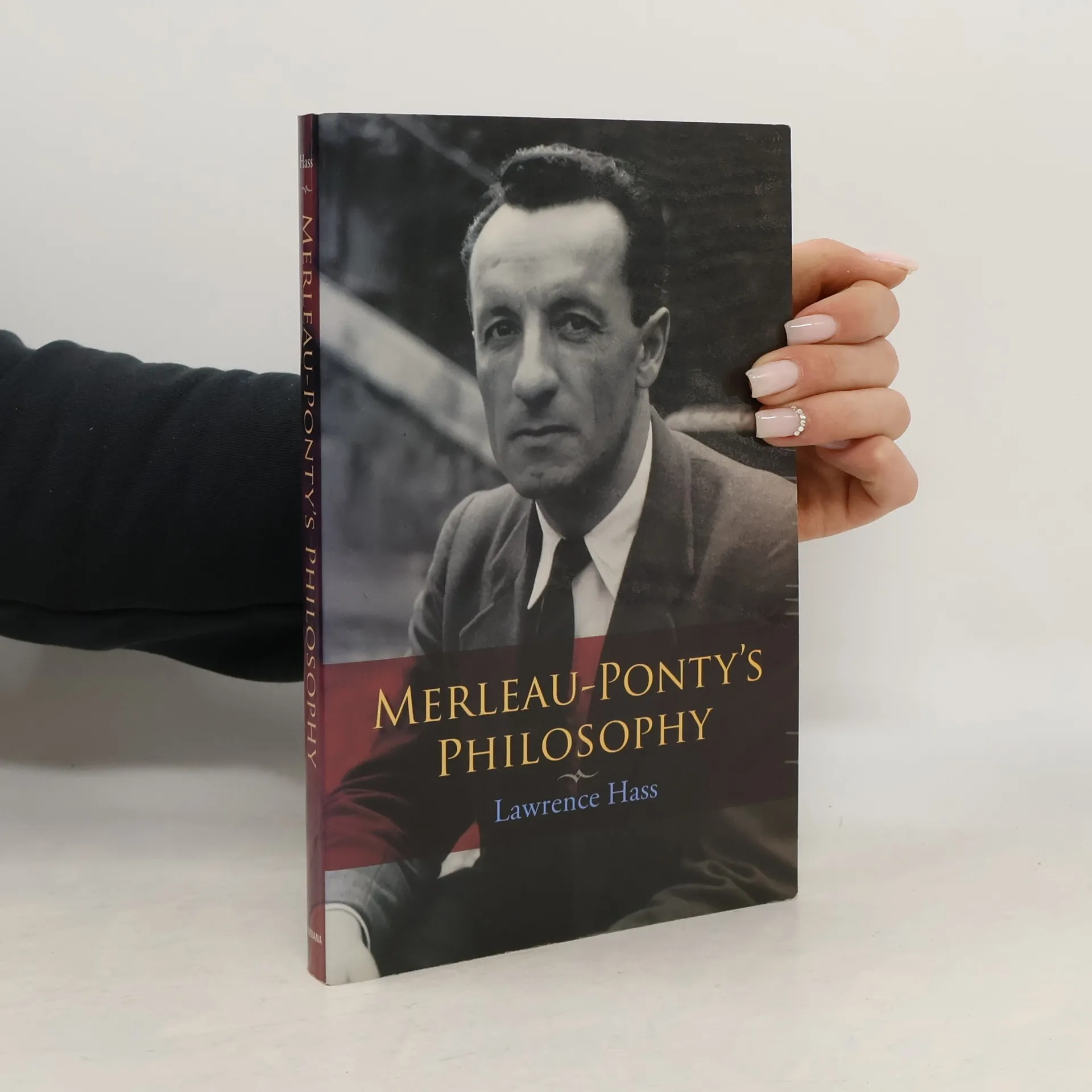
Merleau-Ponty's Philosophy
- 264 pages
- 10 hours of reading
The work of French philosopher Maurice Merleau-Ponty touches on some of the most essential and vital concerns of the world today, yet his ideas are notoriously difficult and not widely understood. This work redresses this problem by offering a carefully argued, critical appreciation of Merleau- Ponty's philosophy.
Diese Vorlesung des Sommersemesters 1931 zeugt von der Suche nach einem verbindenden Horizont fur die Auseinandersetzung mit dem von Aristoteles Vorgedachten. Der Eingangsteil entwirft einen Grundriss des Aristotelischen Philosophierens uberhaupt. In diesen hineingehort auch die Frage nach Dynamis und Energeia; davon handelt Buch IX der Metaphysik. Die Satz fur Satz interpretierten drei ersten Kapitel dieses Buches handeln von Wesen und Wirklichkeit der Kraft. Das dabei in seiner Wandelbarkeit einpragsam zur Sprache gebrachte Phanomen der Kraft oder des Vermogens wird die Keimzelle zu einer Aufspaltung des allgemeingriechischen Seinsbegriffes der Anwesenheit. Wie hiermit dem Verstandnis des ganzen IX. Buches im Zusammenhang mit seinem Schlusskapitel ein Ausgangspunkt gegeben wird, so wird zugleich einer weiteren und weiterreichenden Durchdringung der griechischen Philosophie vorgearbeitet.
Die Vorlesung knupft an das Ende der Grundprobleme der Phanomenologie an. Sie gibt ausfuhrlicher als dort eine Bestimmung des Verhaltnisses von positiver Wissenschaft, wissenschaftlicher Philosophie oder Ontologie und Fundamentalontologie. Die phanomenologische Interpretation der transzendentalen Asthetik und des ersten Buches der transzendentalen Analytik ist gegenuber der spateren Arbeit Kant und das Problem der Metaphysik weniger die abgeloste Darstellung als die Herausarbeitung der Kantdeutung in einer genauen und detaillierten Textanalyse, in der Abschnitt fur Abschnitt durchgegangen wird. Die Vorlesung bietet einen breiteren Zugang zur lntention der Kantdeutung Heideggers.
Grundbegriffe der antiken Philosophie präsentiert einen Vorlesungskurs von Martin Heidegger aus dem Jahr 1926 an der Universität Marburg. Das Buch bietet Heideggers systematischste Geschichte der antiken Philosophie, beginnend mit Thales und endend mit Aristoteles. In dieser Vorlesung, die mit dem Abschluss seines wichtigsten Werkes, Sein und Zeit , zusammenfällt, arbeitet Heidegger an einer scharfen Unterscheidung zwischen Seien und Sein.
Heidegger and the Greeks
- 194 pages
- 7 hours of reading
Martin Heidegger's reflection on Greek thought is recognized as a decisive feature of his philosophical development. This work sheds light on the issues raised by his encounter and engagement with the Greeks. It also sheds light on how core philosophical concepts such as phenomenology, existentialism, hermeneutics, and ethics are understood.
Gesamtausgabe Abt. 2 Vorlesungen 1919 - 1944 Bd. 18. Grundbegriffe der aristotelischen Philosophie
- 418 pages
- 15 hours of reading
Die Vorlesung über Grundbegriffe der aristotelischen Philosophie von Martin Heidegger aus dem Sommersemester 1924 beschäftigt sich mit der ontologischen Forschung des Aristoteles. Heidegger interpretiert zentrale Begriffe und betont das menschliche Dasein als Grundlage der Begrifflichkeit, was zur Entwicklung seiner fundamentalontologischen Analytik führt.
Die "Beiträge zur Philosophie (Vom Ereignis)" gelten als Heideggers zweites Hauptwerk nach "Sein und Zeit". Sie bieten eine neue Perspektive auf die Seinsfrage, indem sie das Wesen des Seins im Kontext des ereigneten Entwurfs untersuchen. Diese Arbeit markiert den Übergang von der Metaphysik zur Wahrheit des Seins und vollzieht die "Kehre" im Denken.
The phenomenology of religious life
- 304 pages
- 11 hours of reading
One of Heidegger's most important early lecture texts
The fundamental concepts of metaphysics
- 512 pages
- 18 hours of reading
Includes a treatment of the history of metaphysics and an elaboration of a philosophy of life and nature. This work defines and develops Heidegger's concepts of organism, animal behaviour, and environment.
Being and Truth
- 256 pages
- 9 hours of reading
Gregory Fried, a prominent philosopher and chair of the Philosophy Department at Suffolk University, explores the intersections of Heidegger's thought in his works. His notable publication, "Heidegger's Polemos: From Being to Politics," delves into the philosophical implications of Heidegger's ideas, while he also contributes as an editor to "A Companion to Heidegger's Introduction to Metaphysics," collaborating with Richard Polt to provide insights into this foundational text.
". . . remarkable account of the impact of postmodern philosophy on the question of ethics and politics . . . commendable also for its balanced view of Heidegger's relationship to politics and ethics. . . . an excellent account of Heidegger's philosophical understanding of technology . . ." ―ChoiceThis book takes as its point of departure the question of that values and their pursuit in the West often perpetuate their own worst enemies. At issue are the dangers in the structures and movements of images, values, and ways of knowing that are most intimately a part of our lives.
Gesamtausgabe - 65: Beiträge zur Philosophie
Vom Ereignis - III. Abteilung: Unveröffentlichte Abhandlungen
- 521 pages
- 19 hours of reading
"[Heidegger's] greatest work... essential for all collections." --Choice ..". students of Heidegger will surely find this book indispensable." --Library Journal Contributions to Philosophy (From Enowning), written in 1936-38 and first published in 1989 as Beitrage zur Philosophie (Vom Ereignis), is Heidegger's most ground-breaking work after the publication of Being and Time in 1927. If Being and Time is perceived as undermining modern metaphysics, Contributions undertakes to reshape the very project of thinking.
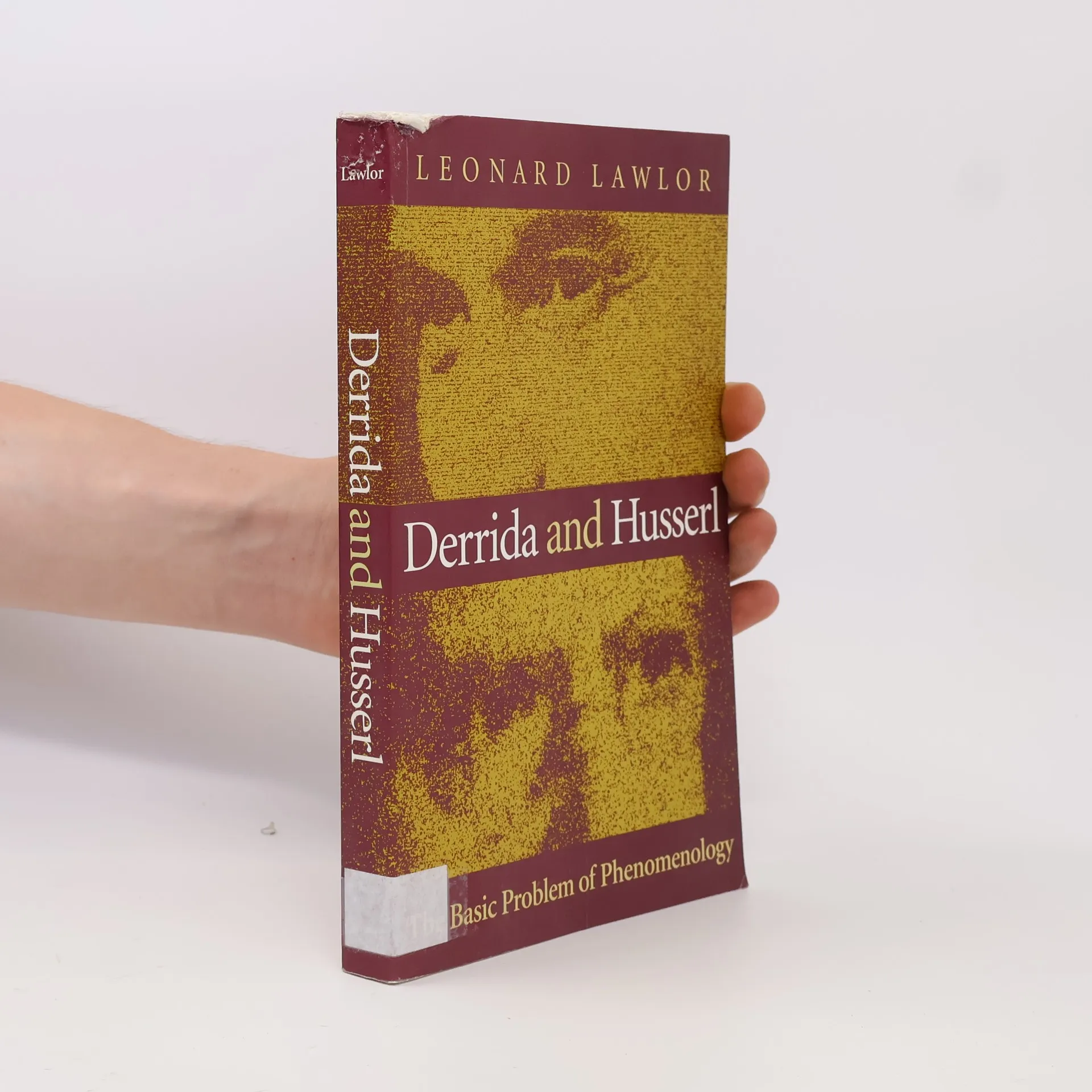
What is the nature of the relationship of Jacques Derrida and deconstruction to Edmund Husserl and phenomenology? Is deconstruction a radical departure from phenomenology or does it trace its origins to the phenomenological project? In Derrida and Husserl, Leonard Lawlor illuminates Husserl’s influence on the French philosophical tradition that inspired Derrida’s thought. Beginning with Eugen Fink’s pivotal essay on Husserl’s philosophy, Lawlor carefully reconstructs the conceptual context in which Derrida developed his interpretation of Husserl. Lawlor’s investigations of the work of Jean Cavaillès, Tran-Duc-Thao, and Jean Hyppolite, as well as recent texts by Derrida, reveal the depth of Derrida’s relationship to Husserl’s phenomenology. Along the way, Lawlor revisits and sheds light on the origin of many important Derridean concepts, such as deconstruction, the metaphysics of presence, différance, intentionality, the trace, and spectrality.